English

From Challenge to Leadership: Upgrading the Carburizing Process at a Construction Machinery Gear Manufacturer
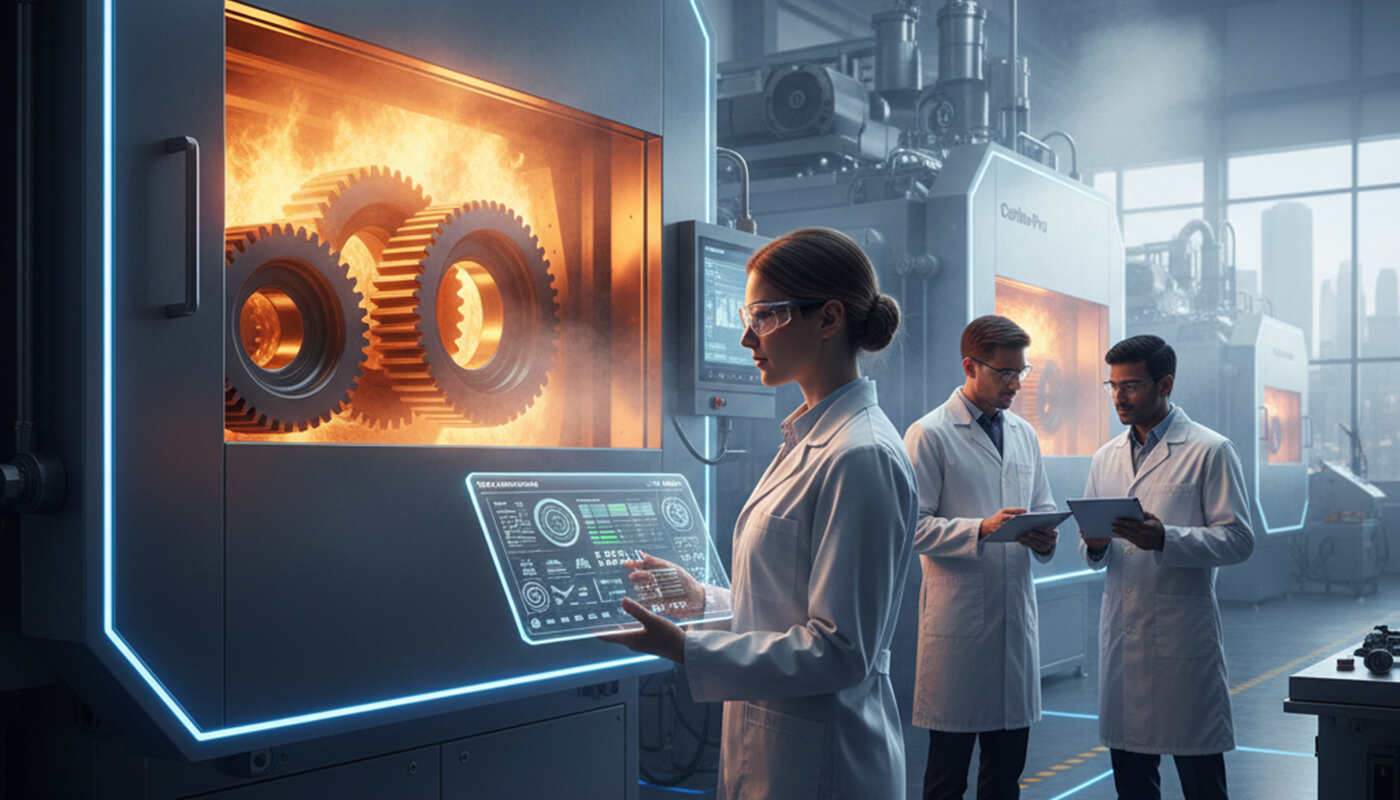
Client Background: A well-known domestic manufacturer of construction machinery gearboxes and transmission systems produces heavy-duty gearboxes that operate under harsh conditions for extended periods. The client has extremely high requirements for the surface hardness, wear resistance, and core toughness of the gears to ensure product reliability and market competitiveness. However, the existing pit-type gas carburizing furnace suffered from insufficient precision in temperature and carbon potential control, leading to fluctuations in the carburized layer quality and occasional grain boundary oxidation, directly impacting the performance and batch consistency of the final product. Challenges Faced: * **Carburized Layer Quality Stability:** Ensuring that the effective carburized layer depth and surface hardness of each batch of gears meet design requirements, eliminating grain boundary oxidation. * **Reduced Heat Treatment Deformation:** Reducing the deformation of gears after carburizing and quenching, reducing the workload and cost of subsequent grinding. * **Improved Production Efficiency:** Optimizing the heat treatment cycle to meet increasing order demands. * **Environmental Compliance:** Reducing gas consumption and emissions to comply with increasingly stringent local environmental policies. Solution: After in-depth analysis of the client’s needs and existing process bottlenecks, we provided a customized “High Vacuum Low-Pressure Carburizing and High-Pressure Gas Quenching Integrated Furnace” solution: Introduction of Vacuum Low-Pressure Carburizing: Replacing the original gas carburizing furnace, using acetylene as the carbon source, pulse carburizing is performed in a vacuum environment, completely eliminating grain boundary oxidation. Multi-stage Precise Temperature and Pressure Control: Multiple thermocouples are installed inside the furnace, combined with advanced control algorithms, ensuring that the temperature uniformity within the furnace reaches 3°C during the heating, homogenization, and carburizing stages; simultaneously, carbon potential control is more precise, and the carburized layer depth and hardness distribution meet design expectations. Integrated High-Pressure Gas Quenching: After carburizing, the workpiece is directly quenched in high-pressure nitrogen inside the furnace, avoiding air contact and minimizing workpiece quenching deformation (gear deformation controlled within 0.03mm), without the need for cleaning. Process Optimization: Based on different gear steel grades and carburizing depth requirements, the carburizing process parameters were optimized, significantly shortening the heat treatment cycle. Implementation Results: Significantly Improved Product Quality: The carburization gradient in the carburized layer is smooth, with no grain boundary oxidation, resulting in an approximately 15% increase in gear fatigue life. Increased Production Efficiency: The overall heat treatment cycle is shortened by 20%, and subsequent grinding time is significantly reduced due to decreased deformation. Reduced Operating Costs: Reduced consumption of carburizing gas and quenching oil, and the elimination of wastewater treatment, resulting in an overall operating cost reduction of 18%. Outstanding Environmental Benefits: Exhaust emissions meet the latest environmental standards, earning the customer a positive social reputation.